Reading
Building a room people return to
Practical room building for any of these worlds. Mostly about doors, restraint, and giving people one rule they can work out by watching.
A room that looks good in a screenshot and a room people come back to are two different objects. The screenshot room gets one visit and a compliment. This is about the other kind.
None of it is specific to one world. It applies anywhere you own a room and can put things in it.
Decide what the room is for, in one sentence
A shop. A quiz. A place to sit with the door locked and talk. A floor to race across. If you cannot finish that sentence, the room ends up called something like My Room and gets visited once, by friends, out of politeness.
The purpose does not have to be clever. It has to be obvious from the doorway.
The door is the only frame you control
You do not choose what a visitor looks at. You choose where they arrive. Almost everybody builds the impressive thing against the far wall, which is the one place a new arrival is facing away from.
Put the good thing in the first view. Stand on the spawn tile, look at what is actually in front of you, and build that. Three seconds decides whether somebody walks further in or closes the room.
Leave floor
The most common mistake in every one of these worlds is a room packed to the walls. It is unwalkable, it is unreadable, and it makes the good pieces vanish into the noise. Empty floor is what makes the full parts read as full.
In August 2023 Habbo raised its cap from 2,500 to 4,000 furni per room, and the floorplan editor from 1,024 to 4,096 tiles. Having the allowance is not a reason to spend it.
Seats face each other
In an isometric room you can see who is next to whom, and that is the whole social engine. Chairs facing a wall kill conversation dead. Two short rows facing each other with a gap between them is the oldest layout in the genre and it still beats anything clever.
Leave a walkway. If people have to path around each other to sit down, they will stand instead, and standing groups drift towards the door.
Make something happen when you are not there
This is the line between a room and a hangout. If nothing in the room does anything unless you are present to press it, the room is only ever as alive as your schedule.
On Habbo the answer is Wired, and anyone comparing scripting systems who has not used it is about to embarrass themselves. It has had fifteen years of development. You stack furniture: a working rule needs at least one Trigger and one Effect, with Conditions and Add-Ons optional on top. Triggers include a user walking on furni, a user saying a keyword, a user entering the room, a game starting and a repeat. Effects include toggling furni state, teleporting to furni, giving points, and moving and rotating furni. It runs on the server, so everybody standing in the room sees the same result. Variables were announced on 14 May 2024, so a comparison written from a 2020 understanding of Wired is already out of date.
The real constraints are structural rather than a judgement on it. Wired boxes are physical furniture. They cost Credits, they sit on tiles, and they come out of the same furni budget as your decoration, so the logic competes with the room for space. And the vocabulary is a fixed catalogue. If Sulake has not shipped a box for the thing you want, there is no way to get there.
If you are on Origins there is no Wired to reach for. Origins is the 2005 client and Wired arrived in late October 2010. What the Origins community was voting on in March 2026 is Functional Furni, described in its own write-up as deliberately not Wired: a lever that opens a door, a key that activates a lock, no scripting and no automation chains.
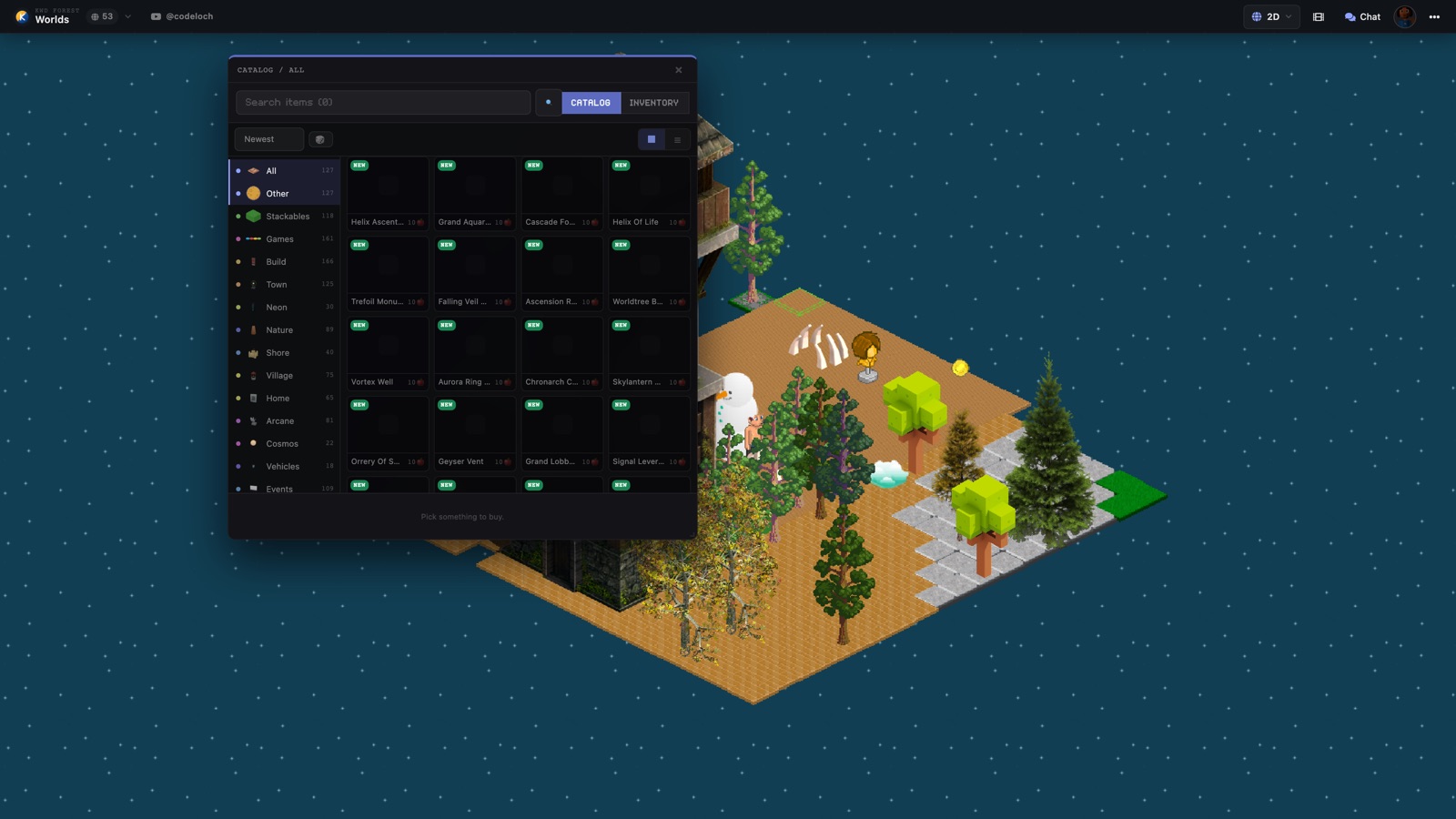
For the record, because I make one of the worlds on this site: in Kynto an item can react to being clicked, being stood on, somebody coming close, and being nudged, and some items already know how to behave the moment you place them, including doors, seats and vehicles. Doors and seats work in the 3D view only. Same idea reached from a different direction, and Habbo has fifteen years of people who already know how to use theirs.
One rule, not five
The best interactive rooms have a single rule a visitor can work out by watching somebody else for ten seconds. Step on the red tile and the door opens. Sit in the chair and the lights change. That is the whole design.
If your room needs a sign explaining the rules, the rules are too complicated, and the sign will be ignored anyway. Watch one person fail to understand it, then cut a rule rather than adding a second sign.
Change something every week
A room that never changes is a photograph. Move three things. Swap where people arrive. Add one object and take one away. People come back to see what is different, and that is close to the only reason anyone comes back to anything.
The part almost nobody does
Be in it, at a time people know about. An empty room stays empty however good it is, and a plain room with two people talking in it beats an empty masterpiece every night of the week.
Everything above this is furniture arrangement. That last one is the actual job.